
Running a Sex Offender Check in Blount County
The Tennessee Bureau of Investigation Sex Offender Registry, commonly called TNSOR, is the primary source for registration in Tennessee. Choose Blount County in the county filter for a county-centered result set. Name, city, ZIP code, and address-based controls can narrow the search. The Blount County registry result is separate from a criminal court case file or TBI's general name-based history product.
Use the National Sex Offender Public Website when the person or address may involve another state, territory, or tribal jurisdiction. NSOPW routes searches across participating public registries. TNSOR remains the direct source for Tennessee profile detail and local registration status. Neither result should be read as permission to approach a registrant.
The official TNSOR search screen shows the state registry entry point used for a Blount County sex offender check.
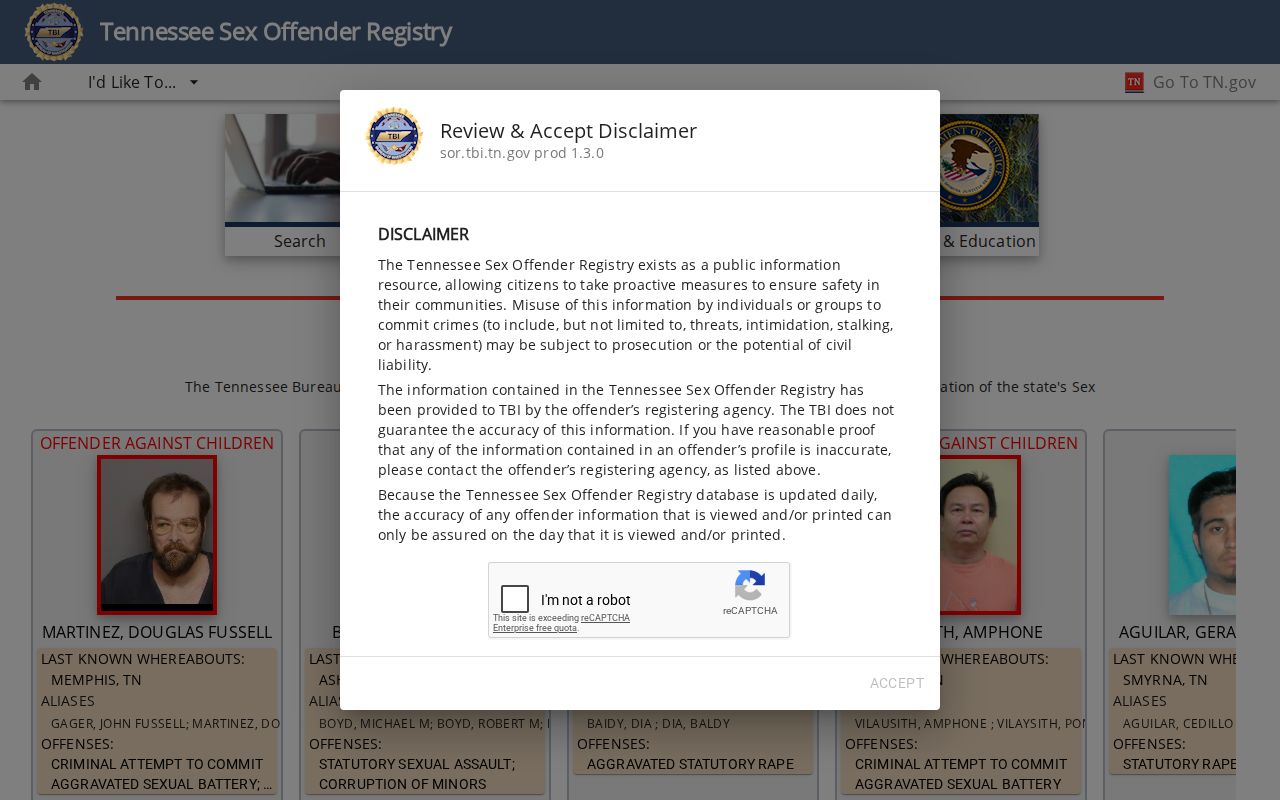
The blank search interface keeps the focus on official fields without reproducing any registrant's identity or photograph.
Blount County Registry Search Channels
TNSOR and NSOPW answer related but different questions. TNSOR is administered by TBI and receives profile information from the person's registering agency. It is the best place to review a Blount County classification, qualifying offense, address data that the law makes public, and the latest registration or verification fields. NSOPW is the broader layer for a national location or name search.
| Channel | Best Use | Geographic Scope |
|---|---|---|
| TNSOR | Tennessee profile and registration details | Statewide, filterable to Blount County |
| NSOPW | Search across participating jurisdictions | National, territorial, and tribal sources |
| BCSO or city police | Report suspected local noncompliance | The registering or local law-enforcement jurisdiction |
A national result can lead back to the source jurisdiction for more detail. A Tennessee result tied to Blount County should be checked on TNSOR before relying on a classification or status.
Searching the Tennessee Bureau of Investigation Sex Offender Registry (TNSOR)
Start with the narrowest reliable facts. A full name can distinguish common surnames, while a county or ZIP search can show registered locations near an area of concern. Geographic results may change with the address and radius controls shown in the live interface. Do not guess at a field that is not displayed.
- Open TNSOR and review its public-use terms before entering a query.
- Search by first and last name, or use Blount County, city, ZIP, address, and available radius controls.
- Compare the result list carefully, including aliases and physical details where reported.
- Open the official profile and read the classification, offense, registering agency, and current registration status.
| Field Label | Type | Required | Notes |
|---|---|---|---|
| Last Name | Text | Optional or unspecified | Use the known spelling and review reported aliases |
| First Name | Text | Optional or unspecified | Combine with last name to narrow matches |
| County | Dropdown | Optional | Select Blount for county-centered results |
| City | Text or dropdown | Optional | Supports location-based searching |
| ZIP Code | Text | Optional | Use a five-digit ZIP |
| Address and Radius | Location controls | Optional | Confirm current radius choices in the live interface |
| Search or Clear | Buttons | Not applicable | Runs or resets the query |
Missing Blount County Registry Results
A person expected in the Blount County registry may not appear for several reasons. The offense may not trigger Tennessee registration. A lawful termination or removal may have occurred. Data may still be moving from a registering agency, or the person may be noncompliant. A spelling error, alias, location change, or mistaken assumption can also affect a search.
Try both name and geographic filters, then use NSOPW if another jurisdiction is possible. If facts support a concern about noncompliance in Blount County, call the Blount County Sheriff's Office at 865-273-5000 or the police department with local jurisdiction. Do not confront the person. TBI handles registry database and termination questions, while local law enforcement handles a local compliance report.
What a Registry Profile Shows
A public Blount County TNSOR profile can combine identity, location, offense, and registration data. The categories below come from the official details interface, but each profile varies. Some fields may not be available, and the registry should never be treated as a complete criminal-history report.
| Name and Aliases | Shows the registered name and reported aliases where available. |
|---|---|
| Photo and Description | May show a photo, date of birth, sex, race, height, weight, hair, eyes, and reported marks. |
| Registered Location | May include primary or secondary residence and a geographic presentation permitted by law. |
| Offense Record | Can identify the qualifying offense, statute, conviction date, jurisdiction, and authorized victim-age information. |
| Classification | Identifies the Tennessee offender classification tied to registration duties. |
| Registration Status | May show the registering agency, compliance status, and last registration or verification information. |
| Other Public Fields | Can include vehicles and other categories when Tennessee law makes them public. |
A last-registration field is one status point, not a full account of private supervision activity. Read it with the classification and registering-agency fields.
Blount County Registry Profiles Differ
The Blount County TNSOR result serves a specific public-safety purpose. It lists people whose qualifying offense and status create a duty under Tennessee's registration law. It does not list every arrest, charge, dismissal, or conviction in Blount County. It may include a limited criminal-history table, but that does not turn the profile into a general record check.
For the filed charges, motions, judgment, and sentence in a specific prosecution, use the Blount County criminal court case record. For a Tennessee name-based repository history, TBI operates a separate product. Keeping these sources apart prevents a registry classification from being mistaken for the whole court or arrest history.
Registration Requirements and Levels in Tennessee
Tennessee distinguishes sexual offenders from violent sexual offenders and sets different duration and reporting duties. TBI guidance states that a sexual offender who is not otherwise subject to lifetime registration may seek termination after the statutory period, but removal is not automatic. Compliance and conviction history affect eligibility. Certain categories remain registered for life.
| Tennessee Category | General Duration or Termination Rule | Reporting Pattern |
|---|---|---|
| Sexual offender, not otherwise lifetime | May request termination after 10 years from sentence expiration, subject to statutory requirements | Annual reporting |
| Violent sexual offender | Lifetime; no ordinary termination route | Quarterly reporting |
| Victim under 13 | Lifetime under TBI guidance | Frequency follows the applicable classification and duties |
| Two or more triggering convictions | Lifetime; not eligible through the ordinary route | Frequency follows the applicable classification and duties |
| Homeless registrant | Duration follows the underlying classification | Monthly reporting |
| Juvenile adjudication | Separate termination rules under § 40-39-207(j)(3) | Use the governing order and statute |
The official TNSOR information page explains registry law, duration, termination, and public-use limits.
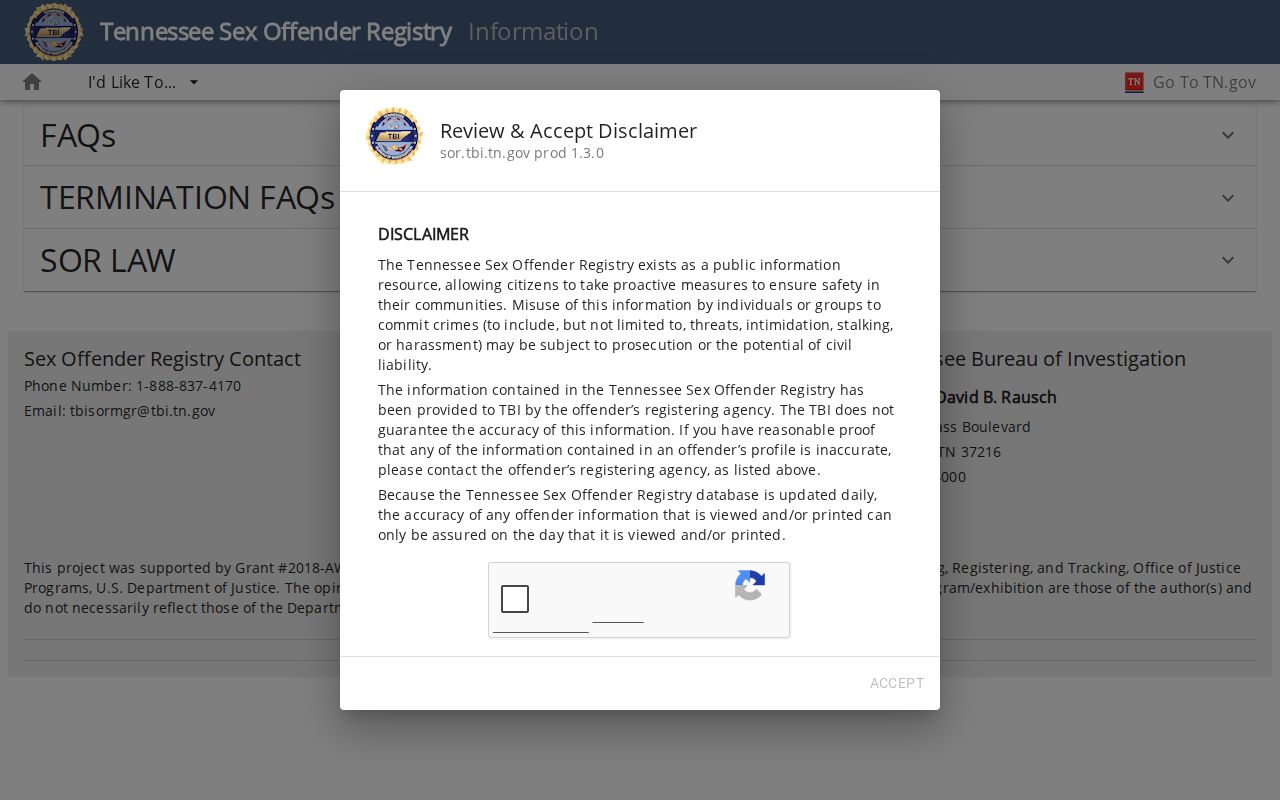
The state information screen is the right place to recheck a category or reporting rule before acting on older guidance.
Blount County Registry Removal Rules
A ten-year period does not itself clear a Blount County registry entry. An eligible sexual offender must request termination and meet Tennessee's statutory conditions, including substantial compliance and the absence of a disqualifying new conviction. Violent sexual offenders, cases involving a victim under 13, and people with two or more registry-triggering convictions generally remain registered for life.
A conviction that was overturned, vacated, expunged, or withdrawn may support removal through another route. The registrant or legal representative must supply the required court documents to TBI or the registering agency. Tenn. Code Ann. §§ 40-39-207 and 40-39-209 control termination and removal. The signed order and state processing, not an empty search result, establish the outcome.
Blount County National Registry Checks
NSOPW is useful when a Blount County registry search also needs to reach beyond Tennessee. The U.S. Department of Justice service searches participating jurisdiction websites and points the reader to the public source that supplied a match. Coverage and update timing still depend on those jurisdictions.
The official NSOPW interface provides the national search layer.
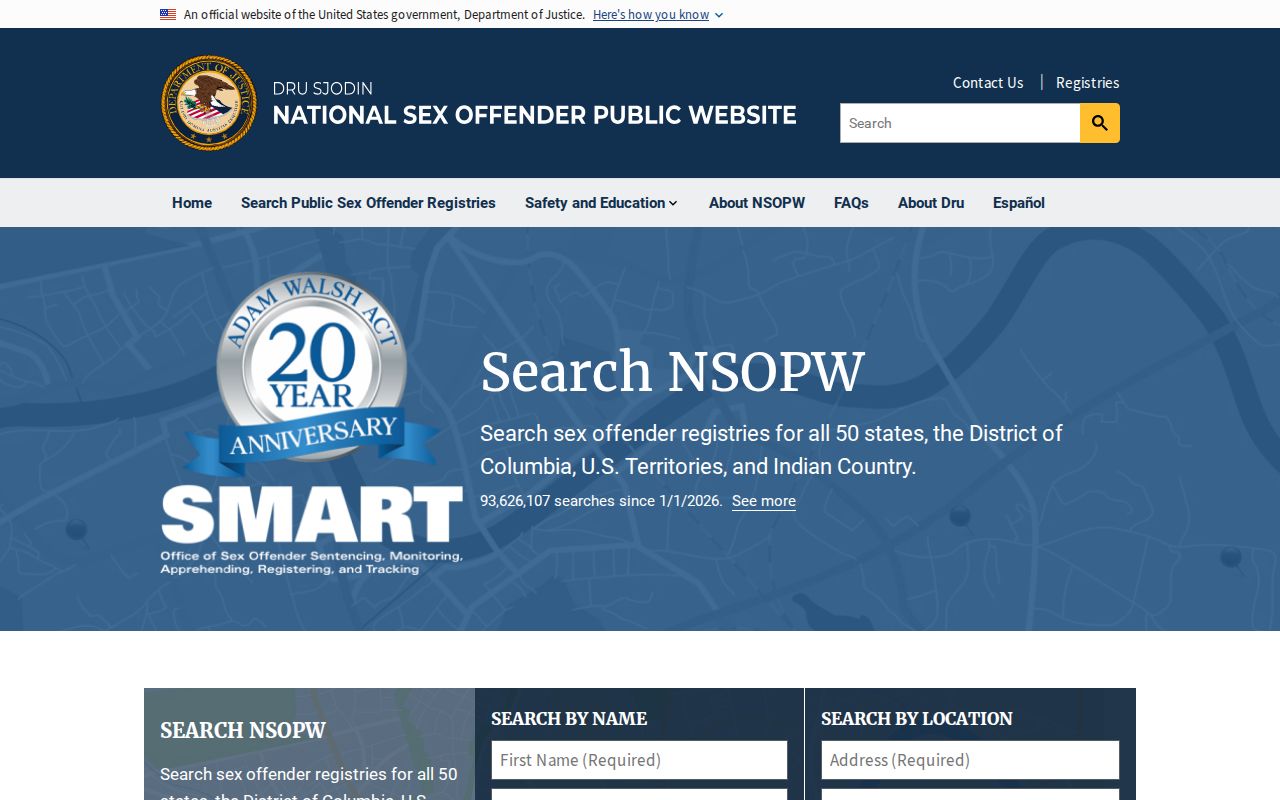
Use that broader screen to identify the source registry, then review the originating jurisdiction's profile for its definitions and current details.
Lawful Use and Community Notification
Registry information supports awareness and personal or family safety planning. It can help a resident understand public locations and registration status, but it cannot settle every question about a person. TBI states that data is supplied by registering agencies. When a status seems wrong, report the concern to the proper office instead of publishing a claim or taking direct action.
Blount County residents can call BCSO at 865-273-5000. A city police department may be the right contact for a city-specific compliance matter. TBI is the source for database and termination-process questions. Suspected noncompliance should go to law enforcement, never to neighbors or social media.
Use registry records lawfully: TBI warns that harassing, stalking, threatening, punishing, or discriminating against a registrant or household through registry information may violate Tennessee criminal and civil law under Tenn. Code Ann. §§ 40-39-201 through 40-39-218.
Residency limits and other duties arise from Tennessee law, including § 40-39-211. A public map should not be used to infer a violation. Law enforcement must assess the address, status, exemptions, and facts.